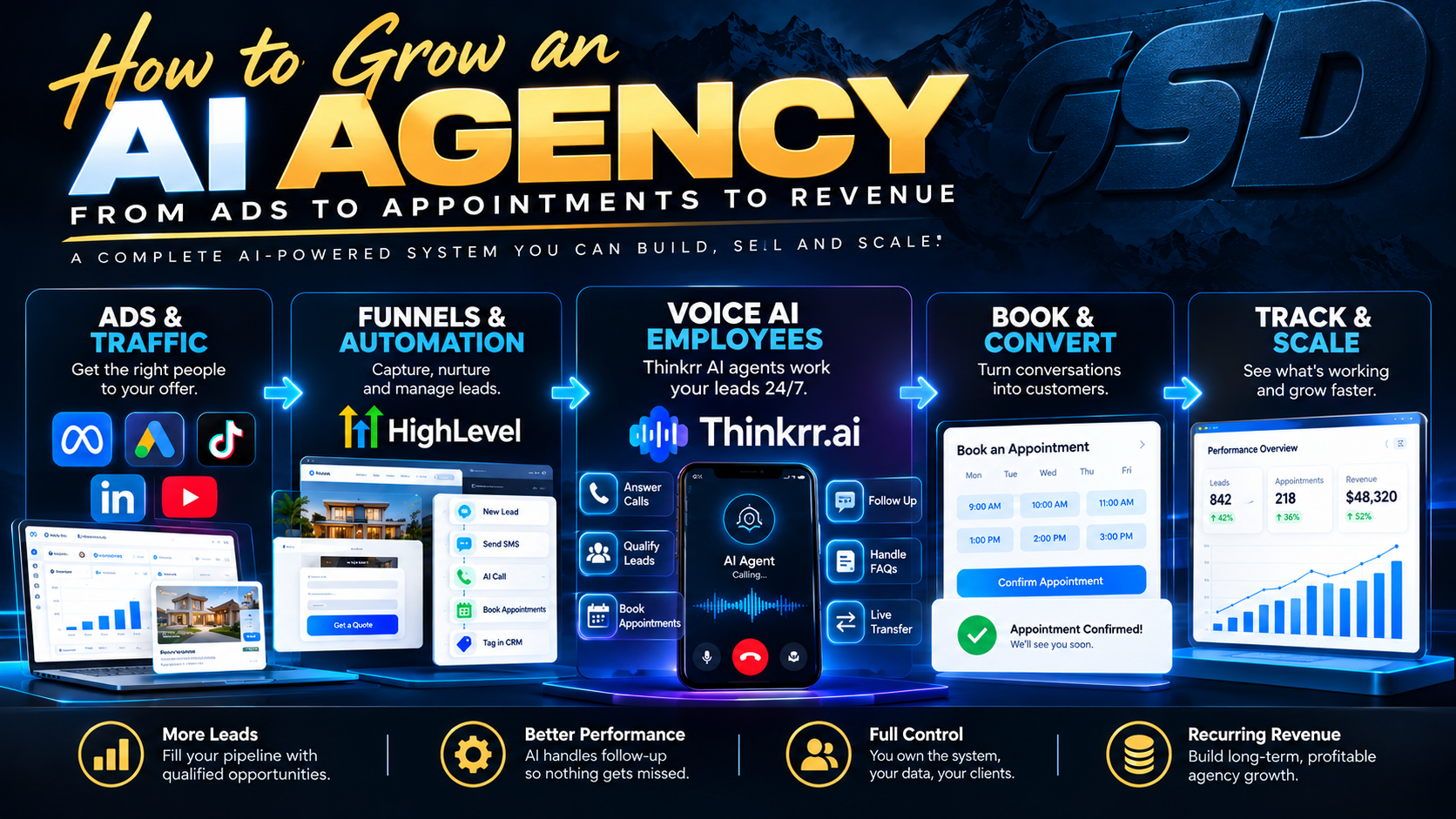
Want to grow an AI agency but struggling to get clients? The problem might not be your technology, your skills, or even your marketing. It might be your offer.
Most AI agency owners try to sell too many things at once: Voice AI systems, HighLevel automation, chatbots, websites, funnels, advertising, and CRM integrations.
They spend hours explaining features, giving demos, and sending proposals, only to hear, “Let me think about it.”
There’s a simpler way.
During a recent GSD Savage Saturday training, we broke down a practical strategy for growing an AI agency by focusing on one problem, creating a low-risk entry offer, and turning that first customer into a long-term relationship.
The strategy is called the Foot-in-the-Door Offer. Or as we like to call it, the “Hot Dog Offer”.
Whether you’re starting an AI automation agency, building workflows in HighLevel, or selling AI voice agents to local businesses, this framework can help you simplify your sales process and create opportunities for recurring revenue.
One of the biggest mistakes new AI agency owners make is trying to become experts at everything.
One day, they’re selling Facebook ads. The next, they’re building HighLevel workflows. Then they’re pitching AI receptionists, chatbots, or website development.
The result? They’re constantly learning new services without mastering how to sell any of them.
Bruce Lee famously emphasized the power of practicing one technique thousands of times rather than thousands of techniques once.
“I fear not the man who practiced 10,000 kicks once, but I fear the man who practiced one kick 10,000 times.”
The same principle applies to growing an AI agency.
Choose one service, solve one problem, and practice selling it until you’re excellent at it.
For example, instead of advertising yourself as a full-service AI automation company, you could specialize in helping HVAC businesses answer missed calls with Voice AI.
Your message becomes simple:
“We help HVAC companies stop losing jobs because nobody answers the phone.”
That’s much easier for a business owner to understand than a presentation explaining 15 different AI capabilities.
Three AI agency services worth specializing in
| Service | Problem it solves | Ideal customer |
|---|---|---|
| AI receptionist | Missed calls and unanswered inquiries | HVAC, plumbing, law firms |
| AI talking website | Website visitors leave without engaging | Local service businesses |
| GoHighLevel workflow automation | Leads get lost or forgotten | Agencies and growing SMBs |
The key is not how many services you offer. It’s how well you can explain the value of the one service your prospect needs.
A foot-in-the-door offer is a smaller, lower-risk service that makes it easier for a potential client to say yes.
Rather than asking a business owner to commit to a $20,000 AI implementation immediately, you offer a logical first step.
This isn’t about giving away your services or discounting everything you do.
It’s about building trust before asking for a larger commitment.
Consider a business owner who has already spent $20,000 or $50,000 on marketing agencies and automation specialists without getting the results they expected.
That business owner may be skeptical about hiring another agency.
Instead of pushing a large contract, you can offer a paid discovery and strategy project.
A client has dozens of confusing HighLevel workflows, broken triggers, disconnected funnels, and no documentation.
Rather than immediately quoting a $12,500 rebuild, offer a $1,500 strategy roadmap.
That roadmap can include:
Now the client has something valuable they can use, even if they decide not to hire you for the implementation.
And if they want the system built, who is the most logical person to hire?
The expert who created the roadmap.
In our own agency, we’ve used this approach to turn strategy discussions into implementation opportunities.
The lesson: Sell clarity before selling complexity.
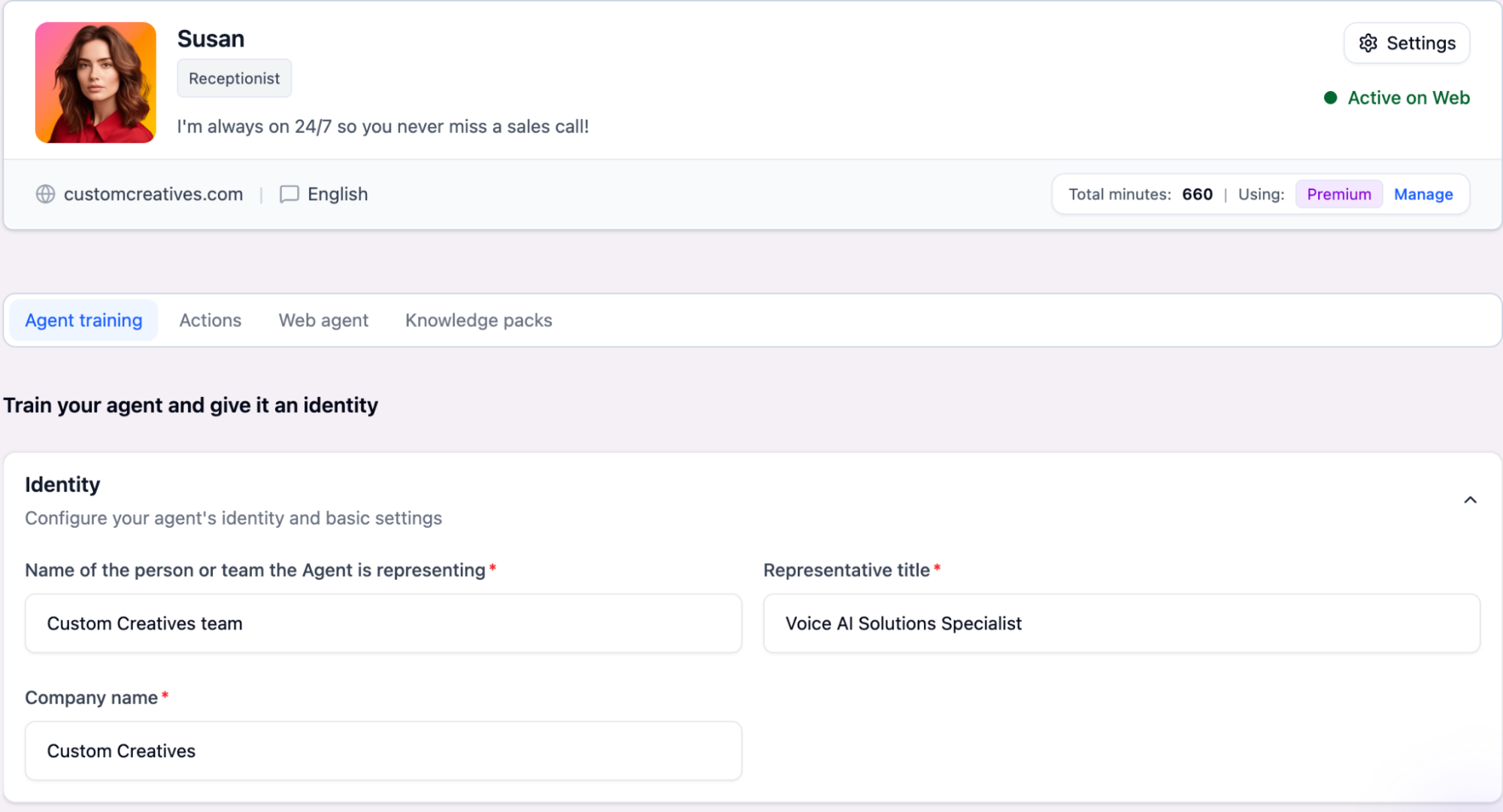
Voice AI systems are one of the most practical services an AI agency can offer because businesses already understand the problem they solve.
When a customer calls and nobody answers, that customer may move on to a competitor.
The business may have already paid for that call through Google Ads, Facebook Ads, SEO, or another marketing channel.
Now the advertising investment has produced an opportunity that nobody handled.
Here’s an example of a simple entry offer discussed during our training.
The offer: Set up an AI receptionist that answers incoming calls after business hours for 30 days.
Example pricing: $500 for the initial 30-day pilot, with usage costs clearly defined.
During the pilot, the business can evaluate how many calls were answered, how many callers were qualified, and how many appointments or transfers occurred.
After 30 days, you review the results together.
The business can continue the service, or you can recommend additional Voice AI systems based on its needs.
This is much easier to sell than asking someone to purchase a complete AI call center before experiencing the technology.
Imagine visiting a roofing company’s website.
Instead of reading through pages of information or completing a long contact form, you click a button and begin speaking with an AI assistant.
You ask about roof repairs, scheduling, or available services.
The AI answers questions, collects information, and can help book an appointment.
That’s what a talking website can do.
During Savage Saturday, I shared a simple offer we use: a $1,000 one-time setup for a talking website, with usage billed separately.
The client gets a working AI experience on their website without a required monthly service retainer for that specific offer.
Once they see the value, the conversation can naturally expand into inbound receptionists, outbound follow-up, and other automations.
The first sale isn’t necessarily the largest opportunity.
It’s the beginning of a business relationship.
Once your AI system is working, you understand more about the client’s operations, their customer journey, and where additional revenue opportunities may exist.
For example, a business might initially hire you to answer missed calls.
Later, you discover that it also struggles with appointment no-shows, old leads that never received follow-up, and website visitors who don’t convert.
Now you have opportunities to recommend additional solutions.
One example from our training involved a larger organization that needed multiple AI employees to qualify prospects, improve appointment attendance, follow up with no-shows, and reactivate older leads.
The proposed implementation was $5,000, plus a $499 platform license, $500 customer service fee, and usage charges.
The larger opportunity was potentially expanding the technology into additional departments and, eventually, a franchise network.
That’s the power of getting your foot in the door.
You don’t need to sell the entire opportunity on day one.
You need to deliver enough value to earn the next conversation.
If you’re a GHL (HighLevel) builder, you already know how complicated a CRM can become.
Businesses often have multiple snapshots, triggers, pipelines, calendars, and workflows created by different contractors.
The problem isn’t always that they need more automation.
Sometimes they need someone to organize what they already have.
This creates an opportunity for HighLevel automation specialists to position themselves as consultants rather than task-based freelancers.
Instead of asking, “What workflows do you want me to build?” ask questions such as:
Those questions help reveal the actual business problem.
Then you can recommend the right combination of HighLevel workflows, calendars, pipelines, and AI integrations.
A prospect fills out a form on a landing page. HighLevel captures the contact and starts a workflow.
A connected Voice AI agent calls the prospect to qualify them and help book an appointment.
The CRM tracks the opportunity, while email and SMS workflows handle confirmations and reminders.
If the prospect misses the appointment, another Voice AI workflow can attempt to reschedule.
The important point is that every component has a purpose.
Don’t sell workflows because they’re impressive. Sell workflows because they solve an expensive problem.

You don’t need to convince every business that AI is the future.
Instead, find businesses with problems your AI service can solve today.
During Savage Saturday, we discussed several examples of businesses that missed calls from real customers.
One attendee shared how he contacted 24 dog groomers before finding someone who answered and booked his appointment. Only one of the other businesses eventually called him back.
Another example involved a roofing emergency that became a roughly $17,000 job for the company that ultimately responded.
These are individual experiences, not industry-wide conversion statistics, but they illustrate a valuable sales lesson.
The customer isn’t always looking for the cheapest or most advanced provider.
Sometimes they’re simply looking for someone who answers.
Start by choosing an industry where missed calls, slow follow-up, or appointment scheduling create measurable problems.
Research businesses running ads, generating leads, or receiving significant phone traffic.
Look at their websites. Do they offer immediate assistance? Can visitors ask questions? Is there an easy way to book?
Then create a demonstration showing how your AI solution could improve the customer experience.
For example, you might show an HVAC company how an AI receptionist could answer an after-hours inquiry, collect the customer’s information, and route an urgent request to the appropriate person.
The goal isn’t to criticize the business.
It’s to show a useful solution to a problem the owner already understands.
Business owners don’t necessarily care about AI models, APIs, triggers, or workflow architecture.
They care about what happens to their business.
Instead of saying:
“Our AI voice platform includes custom integrations, conversational workflows, and automated call routing.”
Try:
“What happens when someone calls your business tonight and nobody answers?”
That question creates a business conversation rather than a technical presentation.
From there, you can discuss missed opportunities, response times, and what a better process would look like.
One attendee shared that he was building a simple missed-call calculator for HVAC companies.
The calculator asked how many calls a business misses each week and the average value of a booked job.
Here’s an illustrative version of that concept.
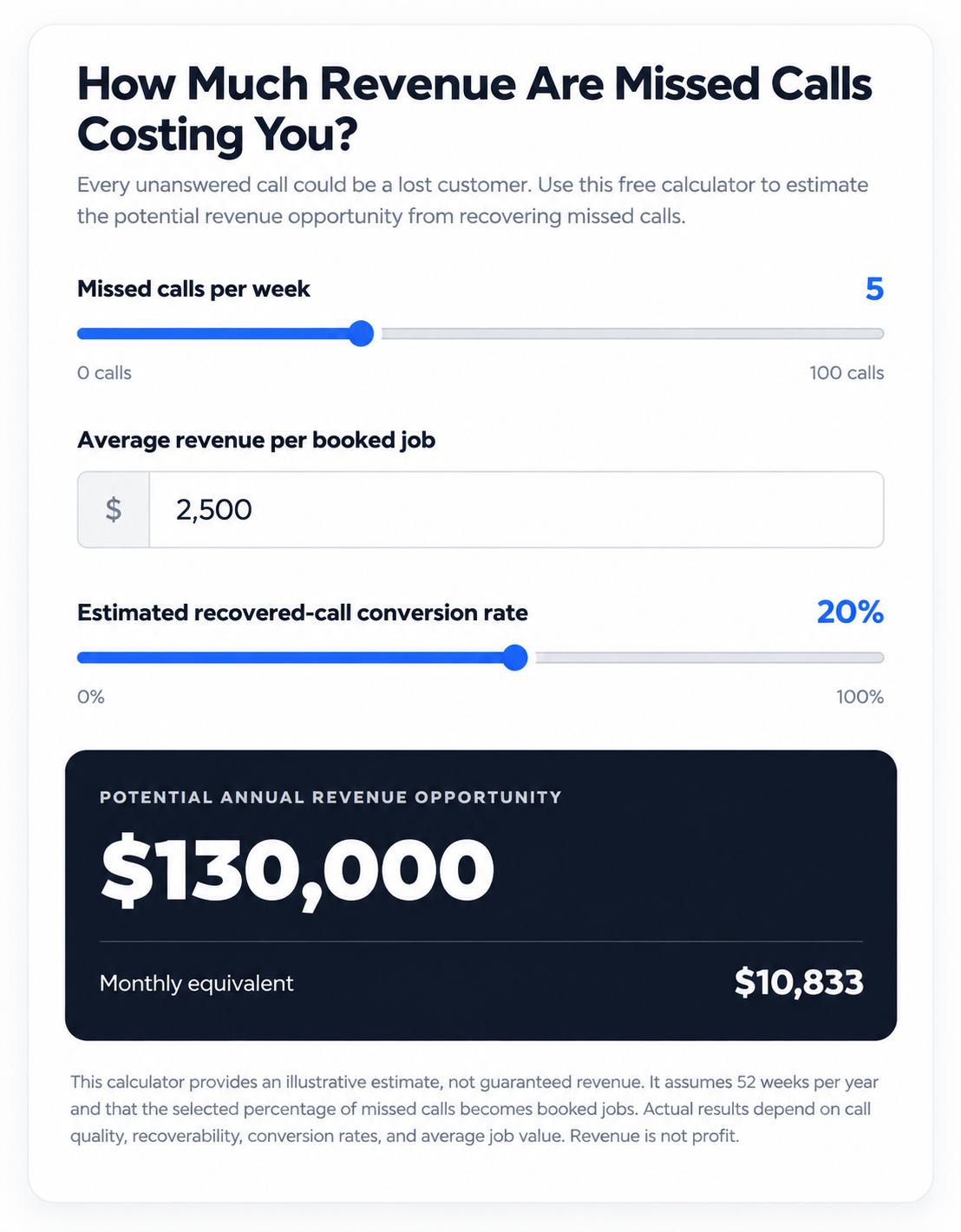
Every unanswered call could be a lost customer. Use this free calculator to estimate the potential revenue opportunity from recovering missed calls.
20%
Monthly equivalent
$10,833
This calculator provides an illustrative estimate, not guaranteed revenue. It assumes 52 weeks per year and that the selected percentage of missed calls becomes booked jobs. Actual results depend on call quality, recoverability, conversion rates, and average job value. Revenue is not profit.
This type of calculator helps business owners explore the financial implications of their existing process.
It also changes the sales conversation from “How much does AI cost?” to “What could better lead handling be worth?”
One of the biggest opportunities in the AI agency business model is ongoing revenue.
Traditional service agencies often depend on constant production.
Every new website, ad campaign, or design project requires additional labor.
Voice AI systems can operate differently.
After the initial build, clients may pay for software access, call usage, monitoring, maintenance, and support.
For example, an agency could charge an implementation fee to configure an AI receptionist, then an ongoing monthly fee to keep the service running.
The goal is to create a reliable system that delivers continuing value without requiring a complete rebuild every month.
However, recurring revenue does not mean zero work. Voice AI systems still need testing, updates, monitoring, and occasional troubleshooting.
Define what is included in the monthly service, how usage is billed, which changes require additional fees, and how support requests are handled.
This protects your profit margins and helps clients understand what they’re purchasing.
The best recurring-revenue service is one the client continues using because it is valuable, reliable, and integrated into daily operations.
Once you’ve mastered selling and delivering individual services, you can begin combining them into a larger solution.
During the training, I shared our AI Ads Engine approach.
Rather than only selling advertising management, the idea is to build an interconnected system that the client owns.
The system combines three major components.
Advertising and lead generation
Drive qualified traffic using campaigns built around the business’s offer and target audience.
HighLevel funnels and workflows
Capture leads, organize pipelines, send reminders, and connect the customer’s journey.
Thinkrr.ai Voice AI employees
Answer calls, follow up with leads, qualify prospects, and help schedule appointments.
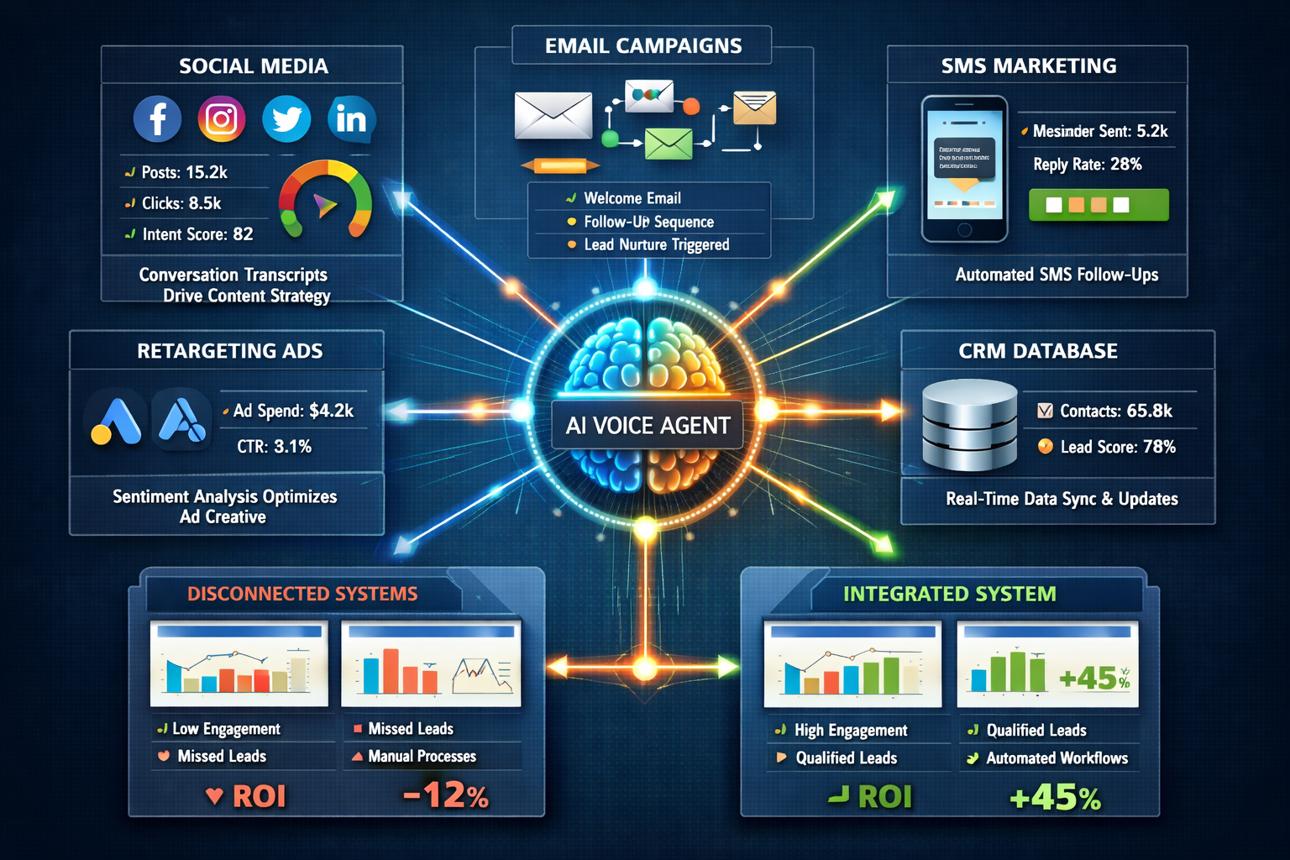
This approach addresses a common problem in digital marketing: businesses generate leads but don’t have an effective process to convert them.
Instead of treating advertising, CRM automation, and sales follow-up as separate services, you connect them into one system.
The AI Ads Engine discussed during the session was offered as a $10,000 implementation, with the core system typically taking approximately 21–30 days to build.
The bigger idea is ownership.
Businesses can invest in a system designed around their operations rather than remaining entirely dependent on an outside agency to manage every part of their marketing.
For AI agency owners, this also demonstrates how individual skills can evolve into higher-value implementation services.
One of the recommendations I shared during the training was to stay focused on one core service until you’re generating approximately $20,000 per month with healthy margins.
That isn’t a universal requirement or a guaranteed milestone. It’s a useful discipline for avoiding distractions before your core offer works consistently.
Consider this simple revenue model.
| Monthly clients | Average monthly fee | Monthly revenue |
|---|---|---|
| 5 | $500 | $2,500 |
| 10 | $500 | $5,000 |
| 20 | $500 | $10,000 |
| 40 | $500 | $20,000 |
Illustrative recurring revenue only; excludes setup fees, expenses, churn, and usage costs.
The challenge isn’t simply getting 40 customers.
It’s building a repeatable process to find prospects, sell the same core solution, implement it efficiently, and keep clients satisfied.
Once your offer becomes predictable, you can improve your delivery systems, train team members, and introduce complementary services.
Paid advertising can help, but it requires a realistic budget and enough time to learn.
During the session, I recommended thinking in terms of a three-month testing runway rather than expecting immediate success from a few days of ads.
I also discussed an observed range of approximately $135-$250 per booked call in some of our campaigns, though costs vary significantly by market, offer, and execution.
The first goal should be understanding the economics of acquiring a customer.
If you spend $2,000 on advertising, how much revenue and gross profit does that spending generate?
Remember that matching advertising spend with revenue is not necessarily true break-even once delivery costs and overhead are included.
Measure the entire sales process, including booked appointments, show rates, close rates, customer value, and margins.
If you want to run Facebook Ads and maximize your budget and own a media team versus hire or rent and outside agency, explore our AI Ads Engine with our team by reaching out to us. The short version is, we built our knowledge base into an AI model that can run ads, optimize, track, report, flag and connect with all your leads and your clients.
Here’s a practical way to apply the strategies from this training.
Follow this four-week action plan to build your offer, find prospects, and start growing your AI agency. Check off each task as you complete it.
Document delivery and identify appropriate next steps
How do I start an AI agency with no clients?
Start with one service that solves a clear business problem. Build a working demonstration, choose a target industry, and create a low-risk entry offer. Focus on winning your first paying client before expanding your services.
What are the best Voice AI systems to sell to local businesses?
AI receptionists, after-hours call answering, outbound lead follow-up, appointment reminders, and AI talking websites are practical starting points. The best solution depends on the customer’s existing call volume and business needs.
Can HighLevel builders make money selling AI automation?
Yes. HighLevel builders can charge for strategy, CRM implementations, workflow automation, ongoing support, and integrations with Voice AI systems. Pricing should reflect project scope, complexity, and ongoing responsibilities.
How much should an AI agency charge for Voice AI?
Pricing varies by implementation complexity, call volume, integrations, and support. Examples discussed during our training included a $500 pilot, a $1,000 talking website setup, and a larger $5,000 multi-agent implementation with ongoing fees.
How can I get more clients for my AI automation agency?
Choose a niche, demonstrate a measurable problem, create a simple offer, use warm introductions, and build relationships in the industry. Practice the same pitch repeatedly instead of changing your service every time a prospect says no.
Can Voice AI work with HighLevel?
Yes. Voice AI platforms such as Thinkrr.ai can integrate with HighLevel to support lead qualification, appointment booking, follow-up, and CRM workflows. The exact features depend on the integration and configuration.
Growing an AI agency isn’t about learning every new tool or launching a new offer every week.
It’s about becoming exceptionally good at solving a problem that businesses are willing to pay to fix.
Start small. Deliver value. Build trust. Then expand.
A $500 AI receptionist pilot could lead to a long-term customer. A $1,500 automation roadmap could lead to a larger HighLevel implementation. A simple talking website could become the starting point for a complete Voice AI system.
But none of those opportunities matter if you never get the first yes.
Master one offer. Solve one problem. Get one customer. Then repeat.
Want to learn how to sell Voice AI systems, build HighLevel automations, and create offers businesses actually want?
Join the GSD community to learn practical agency growth strategies, or explore Thinkrr.ai to start building AI voice agents for your customers.
Based on GSD Savage Saturday, featuring Rahul Alim and live audience Q&A. Pricing examples reflect offers discussed during the training and are not guaranteed earnings or current universal price lists.
About Rahul Alim: Agency Owner of Custom Creatives, Founder of GSD Agency Program, Co-Founder & CRO of Thinkrr AI.
Rahul is always on the edge of marketing, sales and technology and helps his communities implement simple tech solutions for big outcomes. He takes complexity and simplifies into small steps to maximize success. Primary solutions he specializes in include: Voice AI systems, CRM Workflows, Paid Marketing (meta, google), and Consulting. In his free time, he enjoys watching sports, pretty much anything in Los Angeles, spending time with family and friends, and learning from and teaching entrepreneurs.
Get your website's SEO strength evaluated and start getting more customers online.
Get My Free Website Audit