A professional website is often the first interaction a potential client has with your agency. But in today’s competitive digital landscape, simply having an attractive website is no longer enough.
Your website should do more than showcase your services. It should communicate your value, attract the right audience, encourage meaningful conversations, and help turn interested visitors into qualified leads.
For agencies looking to grow, building a high-performing website means combining thoughtful design, clear messaging, and intelligent sales automation.
Here’s how to create an agency website that not only looks professional but also supports measurable business growth.
Every successful agency website begins with a clear understanding of its purpose.
Before choosing layouts, colors, or visual elements, identify who your ideal clients are and what you want them to do when they visit your website.
A marketing agency targeting small businesses, for example, will need a different approach from an agency serving enterprise-level organizations.
Start by answering a few important questions:
These decisions shape everything from your homepage messaging to your lead generation strategy.
A website built around a clear business objective makes it easier for visitors to understand how your agency can help them.
Great website design is not only about appearance. It is about creating an experience that guides visitors toward meaningful action.
When potential clients arrive on your website, they should quickly understand what your agency offers, why it matters, and how to take the next step.
Your homepage should immediately communicate your agency’s main value proposition.
An effective homepage typically includes a clear headline, supporting description, prominent call-to-action, and a concise overview of your services.
Instead of relying on vague statements such as “We Help Businesses Grow,” explain the specific outcomes your agency helps clients achieve.
Visitors are more likely to contact an agency when they feel confident in its expertise.
Consider incorporating client testimonials, case studies, previous work, and detailed service explanations where available.
These elements help potential clients evaluate your credibility before making contact.
Visitors should never struggle to find important information.
Keep your navigation focused on essential pages such as Home, Services, About, Case Studies, and Contact.
A clean structure, mobile-friendly layout, and fast-loading pages can improve the user experience and reduce unnecessary friction.
Ultimately, the goal is to make the journey from visitor to potential client as straightforward as possible.
An agency website should not function as a digital brochure that simply waits for visitors to make contact.
It should actively support the process of identifying, capturing, and nurturing potential clients.
Traditional contact forms remain useful, but they are only one part of an effective lead generation strategy.
For example, an agency can combine service-specific landing pages with consultation booking, automated responses, and lead qualification workflows.
The result is a more structured approach to managing interest.
When someone submits an inquiry, your agency should have a clear process for what happens next.
Does the lead receive an immediate response? Is their information organized in a CRM? Does someone follow up if they don’t schedule a consultation?
Without a consistent process, promising inquiries can easily become missed opportunities.
This is where connected sales automation becomes especially valuable.
Building an effective website is only the beginning. What happens after a potential client expresses interest is just as important.
For many agencies, managing incoming leads requires multiple tools, manual follow-ups, and constant communication between team members.
As lead volume increases, these processes can become difficult to manage consistently.
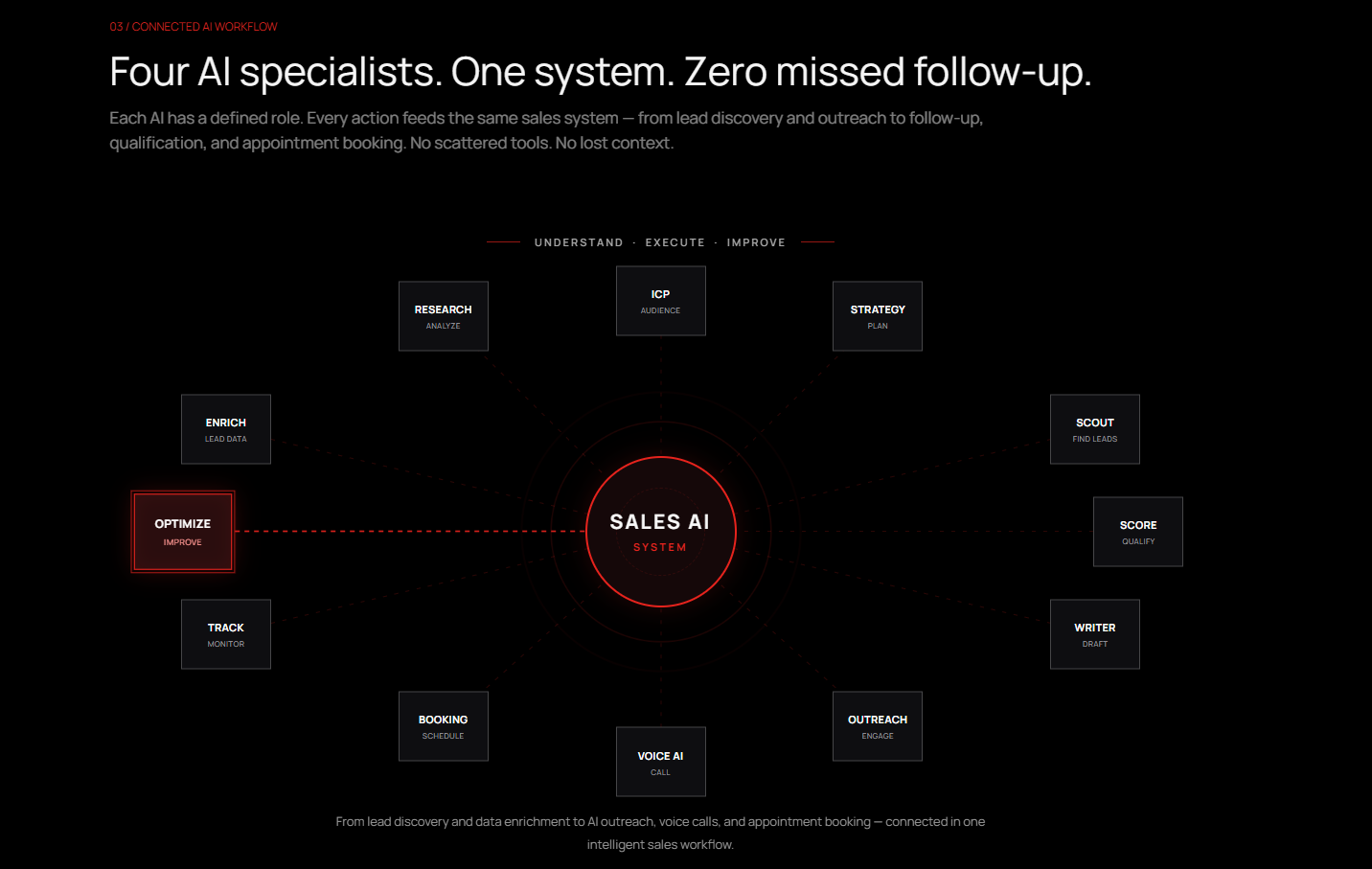
AI-powered sales automation helps address these challenges by connecting lead engagement, communication, and appointment scheduling into a more organized workflow.
Imagine a potential client visiting your website outside regular business hours.
They are interested in your services but have a few questions before booking a consultation.
Instead of waiting until the next business day, an AI Voice Agent can help answer common questions, gather relevant information, and guide the visitor toward the next step.
This creates additional opportunities for engagement without requiring your team to be available around the clock.
Not every website visitor is ready to schedule a meeting immediately.
Some prospects need additional information, while others may want to compare services before making a decision.
Automated email and SMS workflows help agencies maintain consistent communication with interested prospects.
These workflows can deliver relevant information, respond to inquiries, and encourage prospects to reconnect when they are ready.
A connected CRM helps agencies maintain visibility into their sales pipeline.
Instead of managing inquiries across separate spreadsheets, emails, and messaging platforms, teams can organize contact information, monitor engagement, and track follow-up activities.
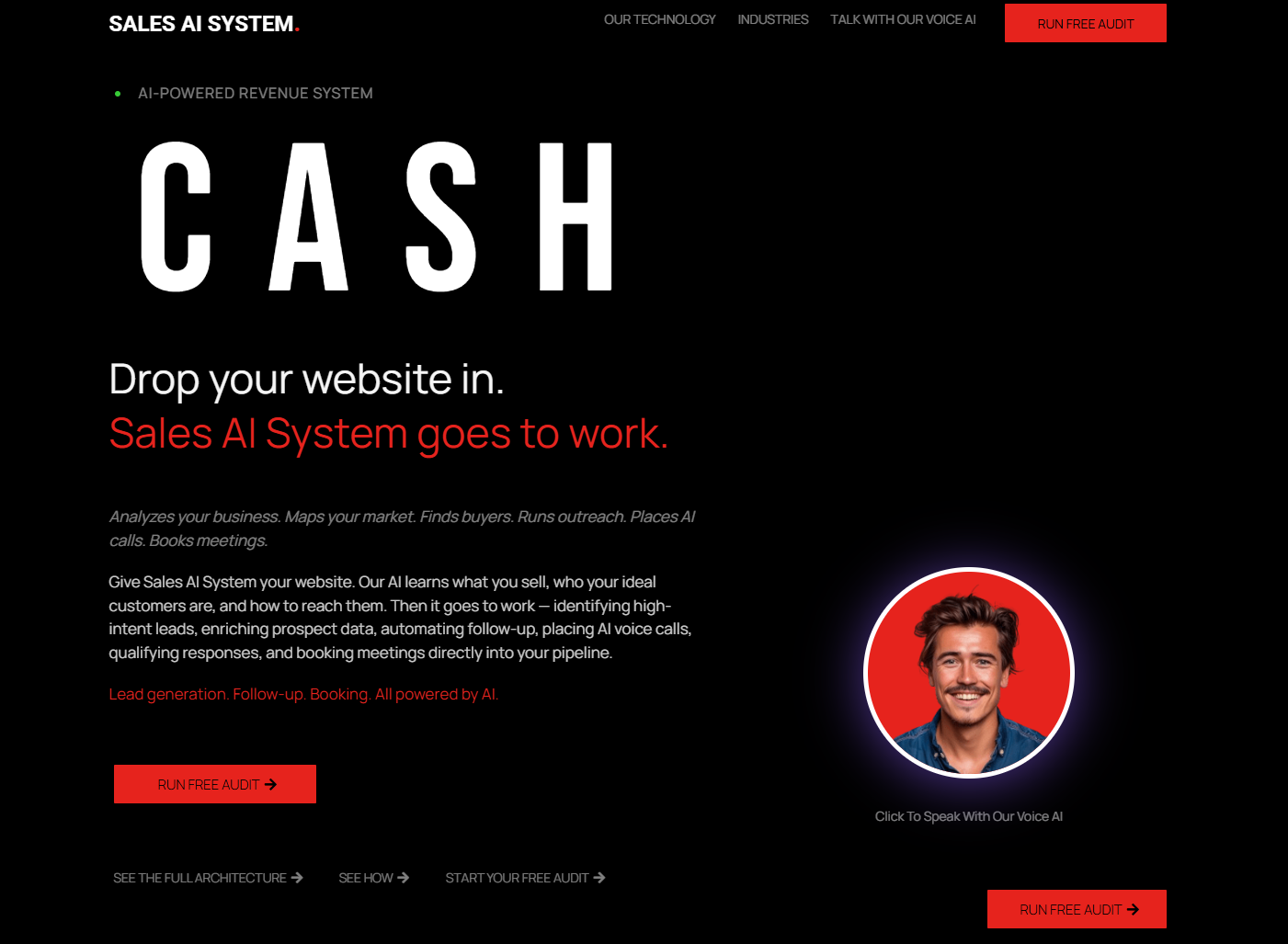
Solutions such as Sales AI System bring lead discovery, AI-powered outreach, Voice AI, and CRM workflows into a connected sales process.
For growing agencies, this approach can reduce repetitive administrative work while allowing teams to focus on building client relationships.
One of the most important parts of an agency website is the experience visitors have after showing interest.
Consider a typical customer journey.
A business owner discovers your agency through a search engine or marketing campaign. They visit your website, explore your services, and decide to request more information.
What happens next can significantly influence whether that interest becomes a meaningful sales conversation.
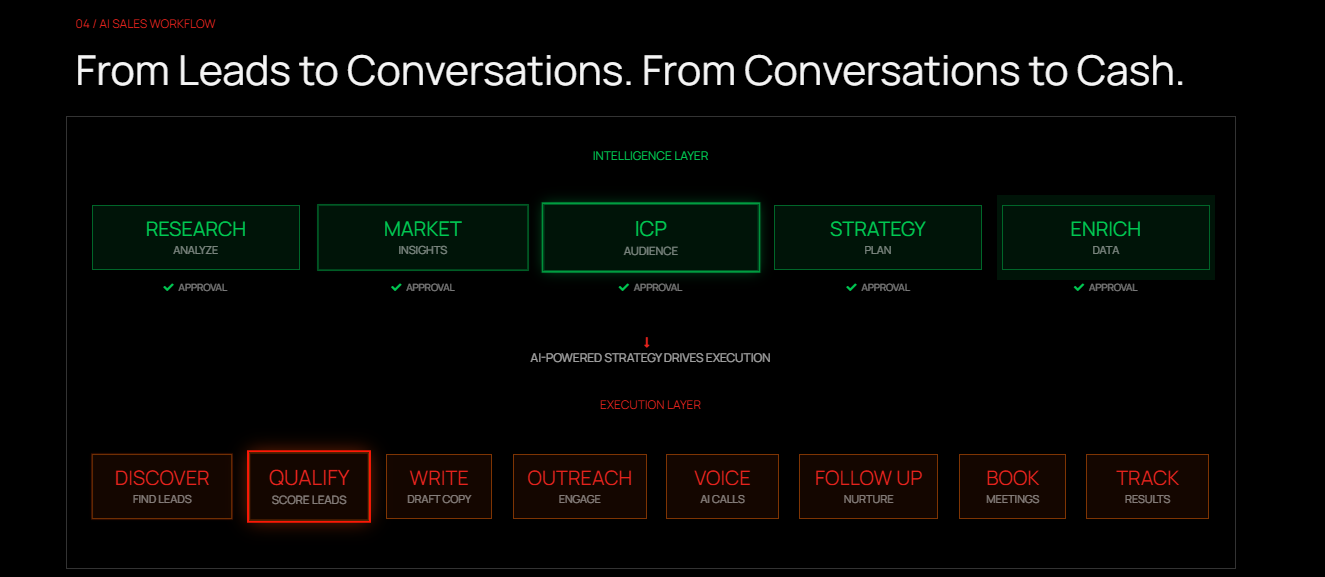
By connecting these stages, agencies can create a more consistent experience for prospects while making the sales process easier to manage.
Importantly, automation should support human interaction rather than replace it entirely.
The goal is to reduce repetitive tasks and help the right conversations reach the right people.
Launching your agency website is an important milestone, but building a successful online presence requires continuous improvement.
Your audience, services, and business goals may evolve over time. Your website should evolve alongside them.
Search engine optimization (SEO) helps potential clients discover your agency when searching for relevant solutions.
Create useful content around the problems your audience wants to solve, optimize page titles and descriptions, and maintain a clear website structure.
Educational blog articles, service pages, and frequently asked questions can help establish expertise while supporting organic search visibility.
Website traffic is valuable, but traffic alone does not determine business success.
Agencies should also monitor the performance of their lead generation and conversion processes.
Useful metrics include:
Understanding these metrics helps agencies identify opportunities to improve both website performance and sales efficiency.
Small adjustments can make a meaningful difference over time.
Testing different headlines, calls-to-action, page layouts, and lead capture methods can help reveal what resonates with your audience.
Combine website analytics with feedback from your sales team to understand where potential clients experience friction.
Continuous improvement ensures your website remains relevant, useful, and aligned with your agency’s growth objectives.
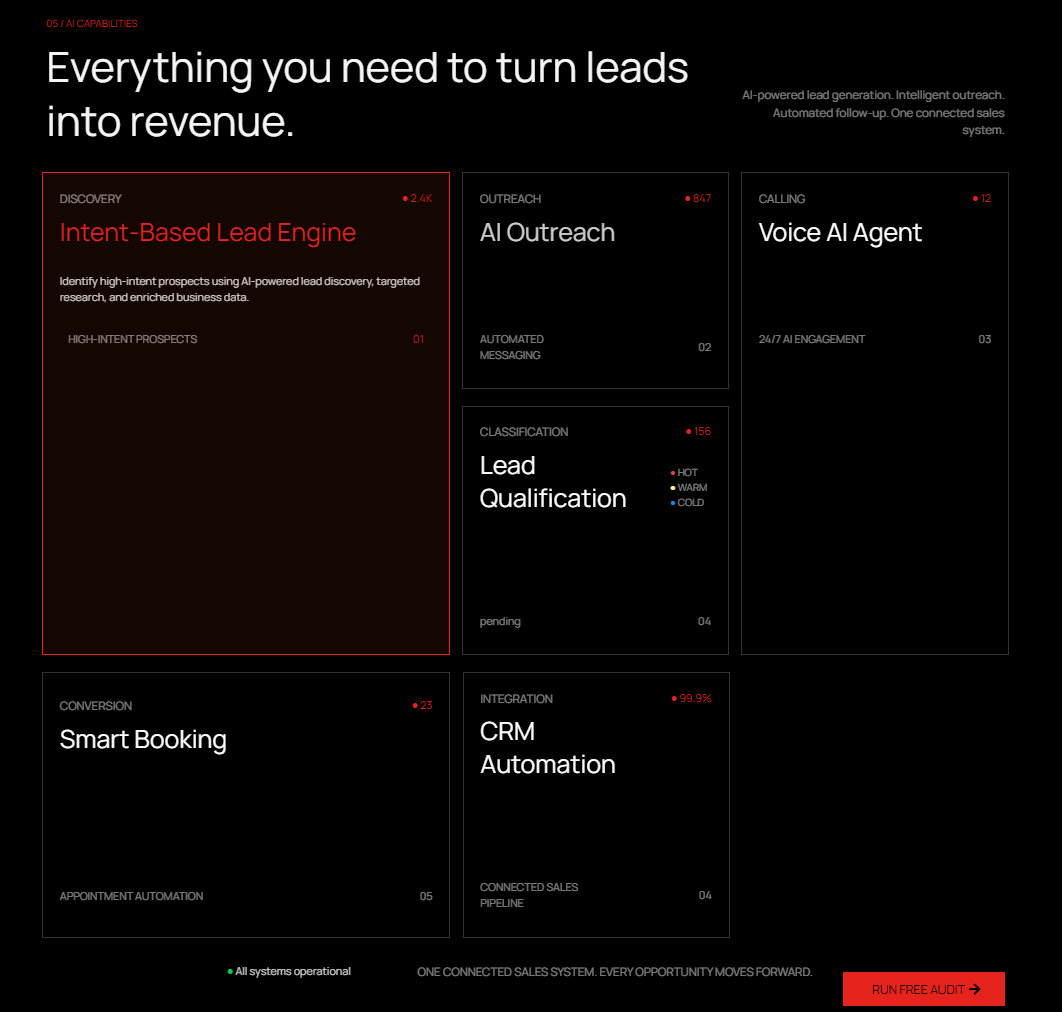
As agencies grow, they often face a familiar challenge: managing more leads and conversations without creating unnecessary operational complexity.
A well-designed website provides the foundation, but connected systems help agencies manage the opportunities that website generates.
By combining a conversion-focused website with lead generation, AI-powered communication, CRM organization, and appointment automation, agencies can create a more scalable approach to business development.
This is the broader opportunity behind platforms like Sales AI System.
Rather than treating prospecting, outreach, follow-up, and scheduling as isolated tasks, agencies can bring these activities together in a coordinated sales workflow.
With the right strategy and technology, your website can become a more valuable part of your overall growth system.
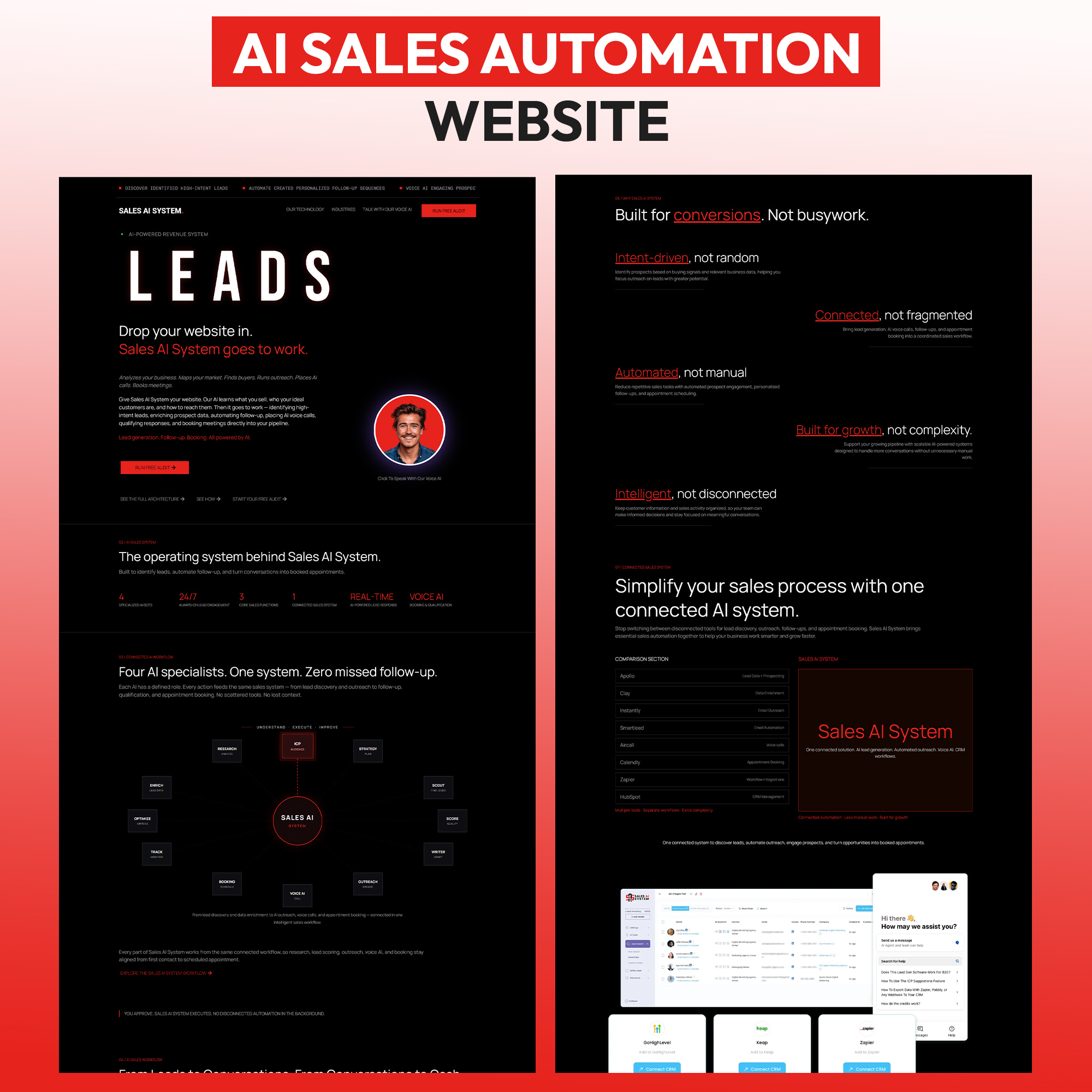
A great website is only the beginning.
To truly grow your business, you need more than an attractive design. You need a connected system that turns visitors into leads and leads into real opportunities.
That means:
That’s what we build at GSD.
We don’t just design websites. We create connected digital experiences that support real business growth.
And we don’t just plan it, design it, or talk about it.
We get it done.
Get your website's SEO strength evaluated and start getting more customers online.
Get My Free Website Audit